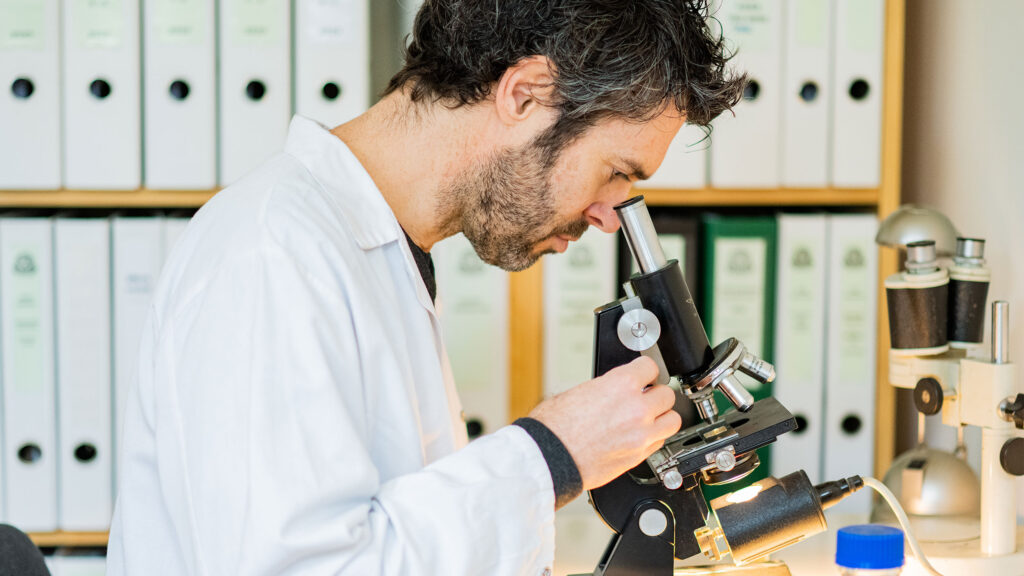
Interview with Dr Oliver Vendl
When it comes to medicinal herbs, efficacy is no accident. As a pharmaceutical company, we are subject to the rigorous requirements of the European Pharmacopoeia. This is the only way to guarantee the quality and effectiveness that our customers have come to expect from our medicinal teas. Dr Oliver Vendl is the Head of Quality Assurance at KOTTAS Pharma and a member of the expert group of the Austrian Pharmacopoeia. In this interview, the expert on the effects and ingredients of herbal remedies explains what the term ‘pharmacopoeia quality’ actually means.
Regarding the DR. KOTTAS teas, there is always mention of so-called ‘pharmacopoeia quality’. What exactly does this mean?
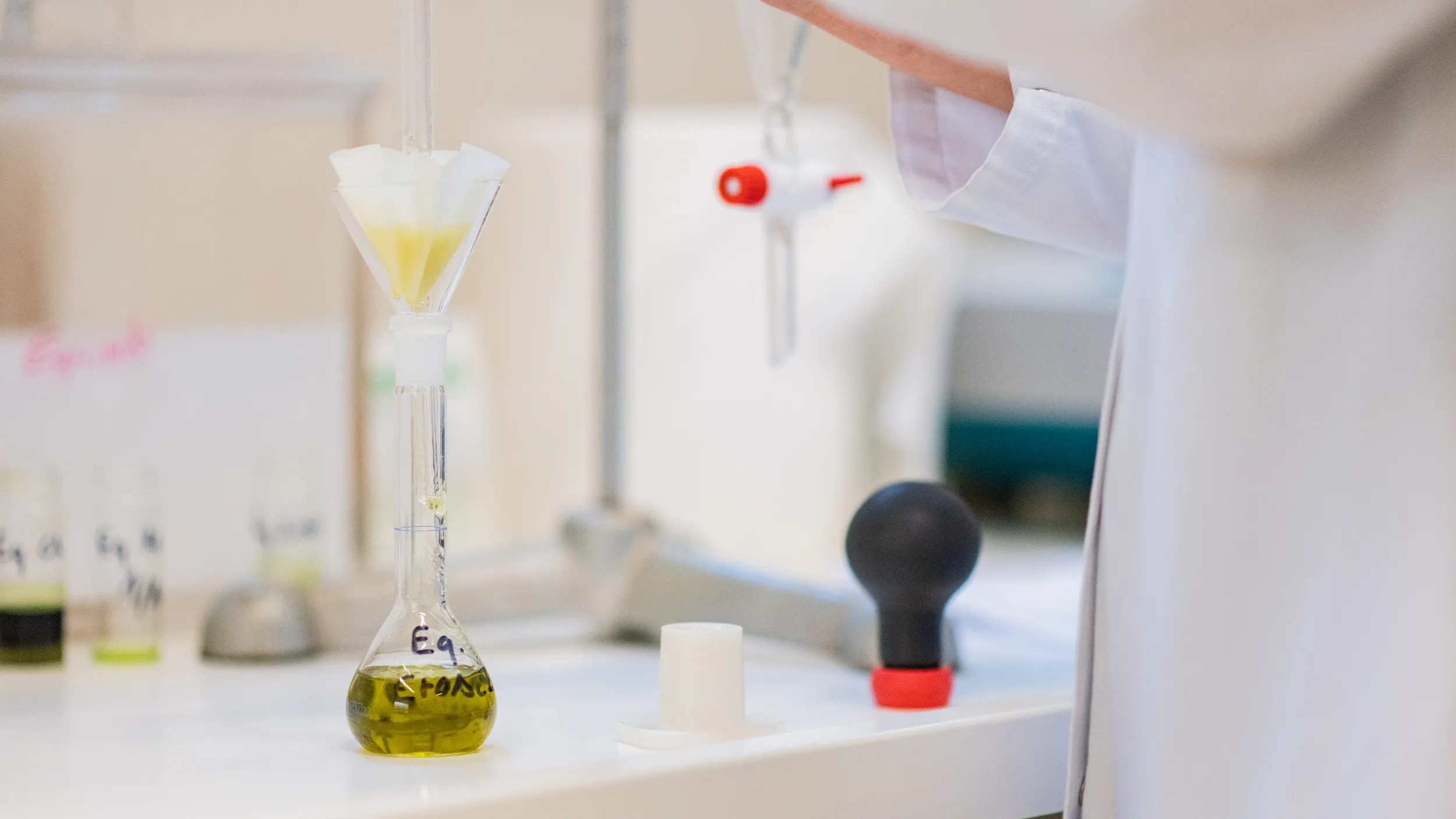
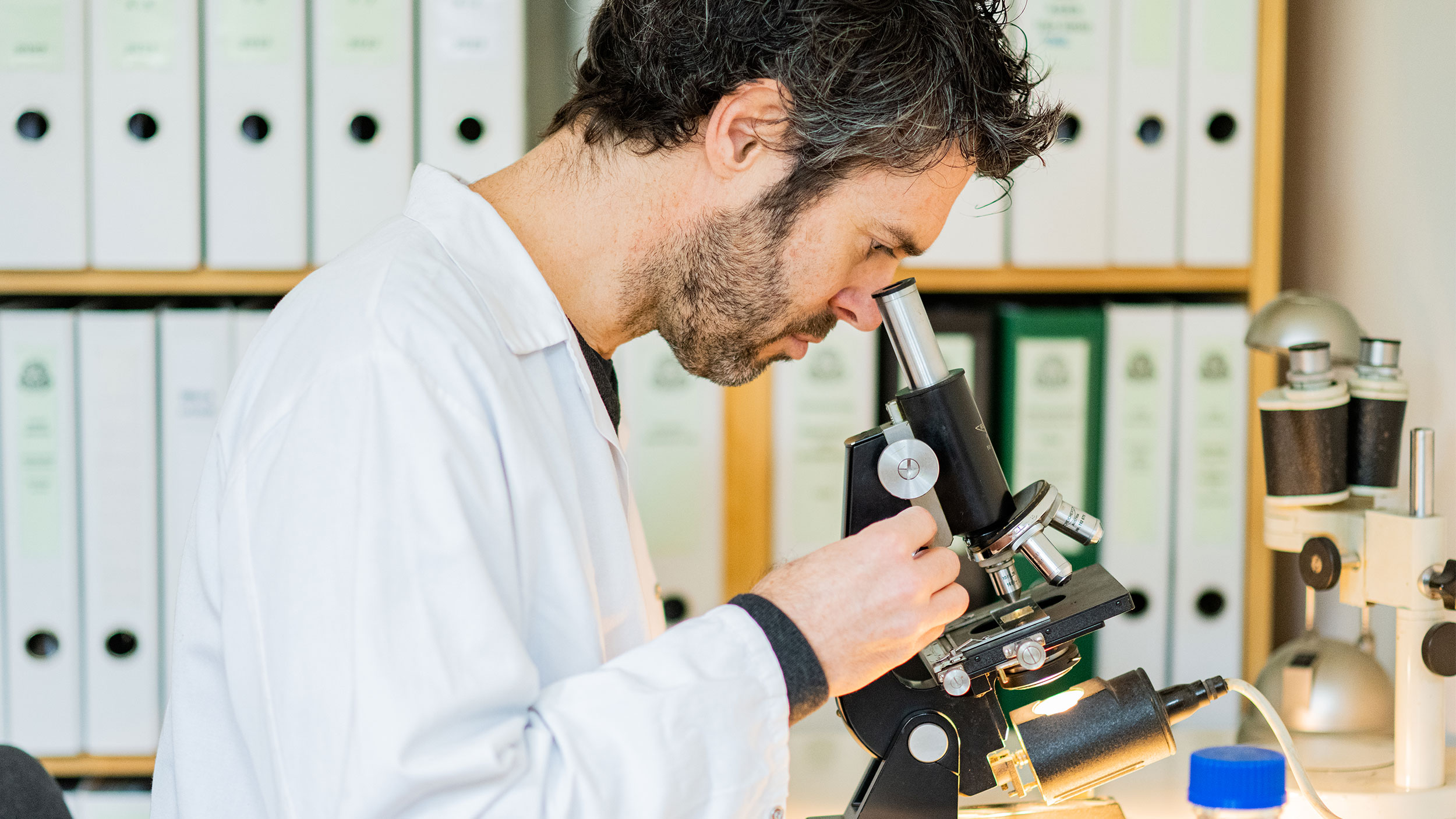
The European Pharmacopoeia lays down strict quality standards for medicinal substances that apply throughout Europe and even beyond. For the most important herbs, it clearly defines which properties they must have in terms of purity, identity and active ingredient content. The most important aspect for pharmaceutical or medical use is the efficacy of a medicinal drug, which is largely dependent on the respective ingredients. According to the European Pharmacopoeia, for example, certain herbs must have a minimum essential oil content before they can be used medicinally. In order to determine whether all the criteria laid down in the pharmacopoeia are met, the herbs must undergo extensive laboratory tests. If a product is of pharmacopoeial quality, this means that it has undergone the most rigorous testing to confirm its suitability for use as a herbal medicinal product.
The legal framework also sets high demands on organic products. What is the difference between pharmacopoeia quality and organic quality?
Organic certificates are primarily focused on cultivation conditions and origin, whereas medicinal products focus on efficacy. Of course, organic products can also fulfil the requirements of the pharmacopoeia. If they have been tested accordingly beforehand, they can be included in medicinal teas, for example. However, because organic labels say nothing about the efficacy of herbs, these labels may not be used for medicinal products.
Accordingly, only food teas, as non-medicinal products, may be labelled as ‘organic’. Besides the term ‘certified quality’, can also be found on many packages.
We can use this designation for all our KOTTAS herbal products because we test them just as extensively as we do our medicinal teas. Our non-medicinal food teas are also tested in the laboratory before they are sold in pharmacies, in our retail shop or in the online shop.

Returning to the European Pharmacopoeia: Who defines these criteria and to whom do they apply?
The European Pharmacopoeia Commission is a body of the Council of Europe, which is made up of experts from the individual national delegations. It defines the standards for the manufacture of medicinal products in the member states. The European Pharmacopoeia is a collection of so-called monographs, i.e. descriptions of the individual plants. These specify exactly which tests must be carried out in order to guarantee the suitability of a plant for medicinal use, for example. These specifications apply to all pharmaceutical companies and not only medicinal plants but also chemical substances are described in monographs. In contrast, other standards prevail in the food sector. There, the primary concern is consumer safety. This aspect naturally also plays a central role for medicinal products, but the requirements go much further.
Can you give an example of this?
Peppermint tea is generally drunk often and with pleasure. Although medicinal teas made from peppermint leaves are used for digestive disorders, among other things, the majority of peppermint teas are simple foods. In this area, aroma is a key criterion. To ensure that the tea actually tastes of peppermint, a proportion of essential oils of 0.6 % is prescribed. In medicinal teas, on the other hand, the focus is on the effect. Therefore, the legally stipulated minimum essential oil content for pharmacopoeia-quality peppermint tea is at least 1.2 % in the whole leaves and 0.9 % in the cut leaves. When it comes to the efficacy of medicinal plants, this can only be guaranteed by the requirements of the pharmacopoeia.
So the essential oil determines how effective a medicinal drug is?
In the case of peppermint, the essential oil is considered to be the active ingredient. This is stated in the corresponding monograph. However, this cannot be said across the board for all herbs, as the requirements differ from plant to plant. In the case oflemon balm, the essential oil content used to be considered decisive for the effect. Then it turned out that rosmarinic acid – which is not contained in the essential oil – is at least as important for medicinal purposes. The marvellous thing about medicinal plants is that their effect often results from the interaction of many components and that no single substance or group of substances can be held solely responsible. And then there are still some plants for which the mechanisms of action are still not fully known.
The herbs are required to meet very high standards. Where can you find plants that meet these criteria? Do you need to grow them specifically?
Some herbs must be collected from the wild because it is not profitable for farmers to cultivate them due to low demand. In contrast, others have to be cultivated to meet high demand. In both cases, it is important to work with experienced partners. For example, when cultivating medicinal plants, the specifications of the pharmacopoeia must be taken into account with regard to the time of harvest. Similarly, collecting wild herbs requires experience and expertise. A sustainable and careful approach is required to preserve the stock.